
What Makes a Fluke Flexible Clamp Meter Ideal for Tight Panels
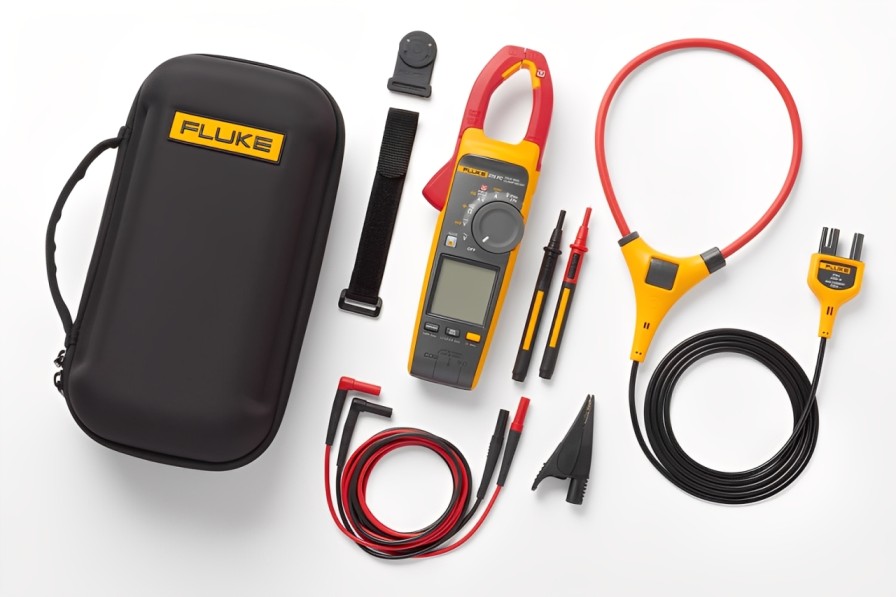
Fluke Flexible Clamp Meter: Why Use One for Safe Testing?
A Fluke Flexible Clamp Meter helps you measure high AC current without breaking the circuit, even when conductors sit deep inside crowded switchgear. Because the flexible coil wraps around large cables, you work faster and reduce risk during live testing. If you service industrial panels, motor control centers, or building distribution, this tool gives you reach, safety, and dependable results in the field.
In addition, modern electrical systems mix power and electronics, so technicians often test current alongside sensors, controllers, and protective components. A flexible clamp meter fits this reality because it handles awkward conductor bundles while supporting safer workflows in tight spaces.
What is a Fluke Flexible Clamp Meter and how does it work?
A Fluke Flexible Clamp Meter typically uses a Rogowski coil, which is a flexible loop that senses the magnetic field around a conductor carrying AC current. Instead of rigid jaws, the coil wraps around the cable, then the meter converts that signal into a current reading.
Because the coil is lightweight and bendable, you can measure:
- Large diameter cables that a standard clamp cannot fit around
- Multiple cables in cramped cabinets where jaw alignment becomes difficult
- Conductors located behind barriers, connectors, and contactors
However, remember that flexible coils usually measure AC current, not DC. Therefore, you should match the meter to the job before you begin.
Why choose a flexible clamp meter instead of a rigid jaw?
Rigid clamp meters work well when you have space and a clean conductor path. Still, real panels often include bundled cables, tight bends, and cable management hardware. In those cases, a Fluke Flexible Clamp Meter can be the more practical choice.
Key advantages in tight electrical environments
- Better access around cables in crowded trays and panels
- Easier positioning around large conductors and bus connections
- Reduced strain on hands and grips during repeated measurements
- Improved safety because you avoid unnecessary handling of live wiring
Moreover, flexible coils help when you deal with large motors, HVAC feeds, UPS systems, and industrial distribution where current levels run high.
Where is a Fluke Flexible Clamp Meter most useful?
You get the most value when access limits your work or when conductor size exceeds standard clamps. For example, maintenance teams often use flexible clamp meters in:
Industrial power and motor circuits
- Motor control centers and VFD output circuits
- Compressor and pump lines in process facilities
- Large feeders with heavy cables and multiple connectors
Building electrical and energy systems
- Main distribution panels and subpanels
- Data center power feeds supporting laptops, servers, and network electronics
- Generator transfer systems and load testing setups
Troubleshooting heat and load problems
When overheating occurs, you often find the cause by checking current balance and loading. Pair current readings with thermal checks to validate issues like loose lugs, aging contactors, or stressed cables. This approach links current, thermal patterns, and safety decisions in one workflow.
Features that make the tool practical for daily work
A professional clamp meter earns its place when it supports consistent, repeatable measurements. While features vary by model, many Fluke flexible clamp solutions focus on field durability and usability.
Measurement clarity and reliability
- Large, readable display for fast decisions
- Stable readings that help you spot load changes
- Wide current range suited to high load circuits
Field ready design
- Strong insulation and rugged build for industrial sites
- Flexible coil designed to loop through awkward cable paths
- Simple controls that reduce mistakes under pressure
Because modern panels include electronics, you may also work near components like capacitor banks, fuses, switches, LEDs, and control boards. Therefore, clean measurement habits matter more than ever.
How to measure current accurately with a flexible coil
Flexible coils are easy to place, but good technique still drives accuracy. Use the steps below to keep measurements consistent.
Setup tips before you clamp
- Inspect the coil jacket for cuts or wear to protect safety
- Keep hands dry and avoid contact with oils on panels or gloves
- Confirm you measure AC current and choose the correct range
Correct placement for dependable readings
- Wrap the coil around a single conductor, not the entire cable bundle
- Close the coil fully so the latch seats properly
- Keep the coil away from sharp bends when possible
- Avoid placing the coil too close to large ferrous metal parts that can affect stability
Reduce noise from nearby electronics
In crowded control cabinets, microcontrollers, controllers, and microprocessors can create switching activity in nearby circuits. Although the clamp measures magnetic fields from current, you can still improve stability by:
- Holding the coil steady for a moment before recording
- Repeating the measurement to confirm consistency
- Measuring the same point across phases to compare balance
Common use cases that directly support maintenance and safety
A Fluke Flexible Clamp Meter fits many practical tasks that technicians perform daily.
Load verification and balancing
- Compare phase currents to identify imbalance
- Validate feeder loading during peak operation
- Confirm changes after equipment upgrades or new circuits
Preventive maintenance checks
- Confirm contactor coil circuits and motor loads behave as expected
- Detect drift that may indicate failing components or loose connections
- Verify protective device coordination assumptions with real load data
If a breaker or connection runs hot, you can cross check:
- Current level under real load
- Thermal signs from hot spots
- Condition of cables, connectors, and terminations
This method supports safer decisions and helps avoid repeat failures.
safely when measuring high current
High current circuits demand careful preparation. Although a flexible clamp reduces direct contact with conductors, safety still comes first.
Practical safety habits on site
- Wear appropriate PPE and follow site lockout rules when required
- Use the meter’s leads only when you need them, and keep them away from live buswork
- Maintain a stable stance and avoid overreaching inside panels
- Keep the area clear of loose tools and metal objects
Also, treat cramped panels with extra caution because accidental contact becomes more likely. When in doubt, slow down and reset your approach.
How this tool fits modern electrical and electronic systems
Today’s facilities combine power distribution with electronics, sensors, and control networks. As a result, a single maintenance visit may involve checking current for motors, then verifying signals for sensors, then confirming controller behavior in a PLC cabinet.
A flexible clamp meter supports this blended work because it helps you confirm real load conditions quickly. From there, you can interpret how current relates to downstream components, such as thermal pads on power devices, capacitor behavior in power supplies, or switching patterns that affect efficiency.
Final thoughts on choosing the right clamp meter for the job
If you regularly work in tight panels, deal with large conductors, or troubleshoot high current circuits, a Fluke Flexible Clamp Meter can be a highly practical upgrade. It improves access around cables and connectors while supporting safer measurement habits. Most importantly, it helps you diagnose load, balance, and thermal issues with less disruption to the system.