
How Does a Fluke Digital Storage Oscilloscope Help?
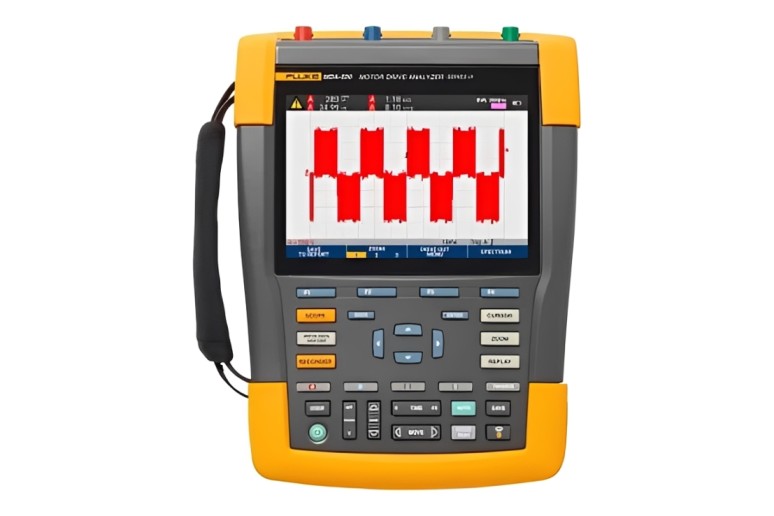
Fluke Digital Storage Oscilloscope for Modern Diagnostics
A Fluke Digital Storage Oscilloscope turns electrical behavior into a clear waveform you can measure, compare, and trust. When signals move fast through electronics, sensors, controllers, and power stages, a dependable scope helps you shift from guesswork to proof. It is especially useful when a fault is brief, load dependent, or tied to switching activity that a meter cannot reveal.
Why waveform storage matters in real troubleshooting
A digital storage oscilloscope samples a signal, stores the waveform in memory, and lets you review what happened before, during, and after an event. That storage capability is essential when a system resets, a relay chatters, or a controller drops out for a fraction of a second.
With stored waveforms you can:
- Capture intermittent glitches and compare them to a known good baseline
- View overshoot, ringing, and noise that affect microcontrollers and microprocessors
- Confirm timing between channels, such as a sensor output and a controller input
- Save evidence for reports and repeatable checks
Where it fits across electronics and industrial systems
A Fluke Digital Storage Oscilloscope is most valuable when you must verify signal integrity across an entire path, not only confirm a voltage level. In maintenance and test environments, common use cases include:
- Control panels where contactors, switches, and safety inputs must react correctly
- Power supplies where ripple and transients can overheat components
- Benches where capacitors and LEDs must behave within specification
- Field wiring where cables and connectors introduce reflections or noise pickup
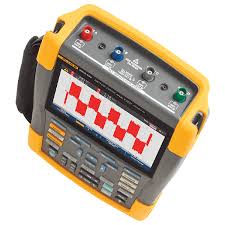
How a scope helps you find the root cause faster
Catching faults with smart triggering
Trigger settings allow the scope to capture the exact moment a fault occurs. You define a condition and let the instrument capture the event automatically.
Typical trigger focused checks include:
- A momentary drop on a sensor supply line
- A missing pulse from a controller output
- A spike that trips protection or blows fuses
Using measurements to confirm what changed
Automated measurements help you verify frequency, duty cycle, pulse width, and peak to peak noise. This matters in switching circuits where small timing shifts lead to large symptoms.
Useful workflows include:
- Checking ripple on a DC rail to assess capacitor health
- Comparing two channels to validate delay between sensors and controllers
- Verifying PWM behavior feeding an actuator stage
Field checks that keep systems stable and safe
Validating signals through cables and connectors
Long cable runs and imperfect connectors can distort a signal even if the source is healthy. A scope lets you compare the signal at the source and at the load to confirm where the change occurs.
Use it to:
- Identify ringing and reflections on long cables
- Detect noise pickup from nearby switching devices
- Spot intermittent opens that do not show up on a static resistance test
Thermal stress can shift component values, change switching thresholds, and create intermittent faults. While the scope is not a thermal tool, it helps confirm electrical behavior that often accompanies heat driven problems.
Watch for:
- Increased ripple as a capacitor warms up
- Timing drift as controllers heat under load
- Brownouts that appear after enclosure temperature rises
Confirming power integrity and protection behavior
Power rails may look stable on a multimeter but still contain ripple, transients, and dips that reset laptops, embedded controllers, or data acquisition modules. A stored waveform shows the full story during startup and load steps.
Check for:
- Brief dips during energizing
- Transients that trigger unexpected shutoff
- Switching noise coupling into sensitive sensor lines

Features to prioritize for your application
Bandwidth and sample rate
Adequate bandwidth and sampling reveal fast edges and short glitches. If you support high speed digital electronics or switching stages, ensure the scope can capture transitions without masking details.
Memory depth and storage tools
Deeper memory allows longer capture windows at higher resolution. This is useful for analyzing startup sequences, rare events, and long control cycles. Storage options also help you build a small library of baseline waveforms.
Probes, accessories, and safe connection habits
Good probes protect both the instrument and the system under test. Use probes with ratings suited to the circuit category and voltage level. Keep leads short where possible to reduce noise pickup and use stable grips on tools for better control.
Safe habits include:
- Confirming ratings before connecting to any live circuit
- Using correct attenuation settings and reference points
- Keeping test leads tidy to avoid accidental contact
Putting it into a repeatable workflow
Capture a baseline waveform in normal operation, then compare readings at multiple points in the path, from the sensor to the controller and out to the load. Save waveforms and notes so the next diagnosis starts with better context.
Why this tool belongs in professional troubleshooting
A Fluke Digital Storage Oscilloscope helps you see what is actually happening in circuits that include sensors, controllers, switches, and protective devices. By combining waveform storage, triggering, and measurements, you can isolate faults faster, protect components, and support safer work practices. When used with good probing and a consistent process, it becomes a practical way to improve uptime and confidence in modern electronics systems.