
How Should the 3M 6098 Dust Filter Be Selected and Managed?
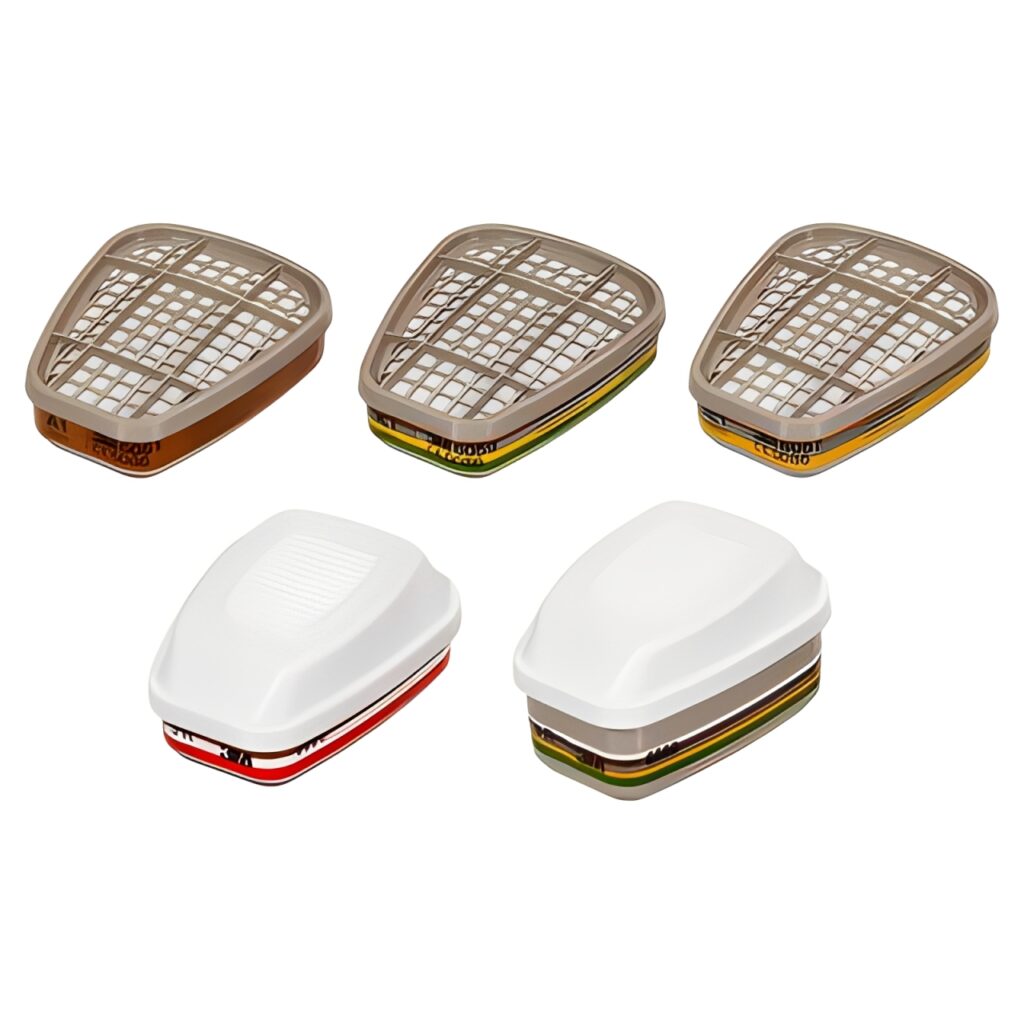
What Role Does the 3M 6098 Dust Filter Perform?
The 3M 6098 Dust Filter is an AXP3 combined filter designed for compatible 3M full-face respirators. Unlike basic particle-only Respirator Filters, model 6098 addresses specified low-boiling organic vapours together with hazardous solid and liquid particles.
This specialised capability makes the filter relevant to carefully assessed chemical, laboratory, maintenance and industrial processes. It must be selected for a known contaminant and used within its documented concentration, duration and environmental limitations.
Why Is a Workplace Risk Assessment Essential?
A respirator filter should be selected only after the airborne hazard has been identified. The assessment needs to consider the substance, physical form, expected concentration, exposure limit, task duration, ventilation and possible emergency conditions.
The AX element is intended for specified organic vapours with boiling points at or below 65°C. The P3 component captures hazardous airborne particles. These classifications do not mean the filter protects against every vapour, gas, dust or fume.
In UK workplaces, selection should form part of a suitable COSHH assessment and respiratory protective equipment programme. Safety data sheets and exposure monitoring can support the decision, but final selection should follow current manufacturer guidance and competent professional advice.
How Does the Bayonet Connection Support Installation?
Model 6098 uses a bayonet-style connection for compatible 3M full-face respirators, including approved models within the 6000 and FF-400 families. The fitting allows each filter to be aligned, pressed into position and turned until locked.
A pair of matching filters must be installed. Using one new and one partially used filter can produce uneven breathing resistance and unreliable service-life management. Both sides should carry the same filter type and be replaced together.
Compatibility must be confirmed from the facepiece instructions. A bayonet fitting from another manufacturer or respirator family should never be assumed to be interchangeable, even when its shape appears similar.
How Should the Filter Change Schedule Be Controlled?
The 6098 is a single-use filter and should not be reused for a second work shift. This requirement is particularly important for AX filters because vapour capacity depends on the contaminant, concentration, humidity, temperature, breathing rate and time in use.
A workplace should define when filters are issued, fitted, removed and discarded. The schedule must not depend on odour alone. Smell can be unreliable, and a wearer may detect a substance only after an unsafe exposure level has been reached.
Supervisors can support consistent control by recording the user, task, contaminant, issue time and disposal time. Unopened filters should remain in suitable packaging until needed and be stored within the temperature and humidity conditions stated by the manufacturer.
Which Respirator Components Need Inspection?
The filter cannot provide dependable protection if the facepiece is damaged or poorly maintained. Before every use, inspect the sealing surface, inhalation valves, exhalation valve, straps, lens, filter connections and associated components.
Suitable Reusable Respirator Accessories may support the replacement of approved seals, straps and valves. Wider Respirator Accessories can help with compatible storage, protection and maintenance arrangements.
Replacement components must match the exact respirator model. Unapproved parts, makeshift repairs or damaged connections can compromise the face seal and allow contaminated air to bypass the filter.
When Must the Wearer Leave the Hazard Area?
The user should immediately leave the contaminated zone if breathing becomes difficult, the respirator shifts, the seal fails, the filter housing is damaged or exposure conditions unexpectedly change. Dizziness, irritation or unusual taste can also indicate that the protection strategy requires urgent review.
The equipment should be examined in a clean area before work resumes. A filter that has been damaged, contaminated externally or used beyond its permitted period must be discarded rather than cleaned for reuse.
Model 6098 should not be washed, immersed in liquid or cleaned with compressed air. These actions can damage the filtration media and spread captured contamination.
Why Is It Different From an Ordinary Face Mask?
General Face Masks vary considerably in design and intended protection. Medical masks, basic dust masks and particle respirators are not automatic substitutes for an AXP3 filter.
The 6098 works as part of a tight-fitting full-face respirator system. It combines specified vapour and particle filtration while the facepiece provides a seal around the wearer’s face. The complete system therefore depends on compatibility, correct assembly, a successful fit test and a seal check before entry.
Facial hair, damaged straps, incorrect adjustment and incompatible eyewear can create leakage. A high-class filter cannot correct a leak between the mask and the wearer’s skin.
When Is Another Respiratory System More Appropriate?
An unpowered filter respirator is not suitable for every atmosphere. When contaminants are unknown, concentrations are immediately dangerous, oxygen is deficient or the filter’s permitted limits could be exceeded, another respiratory system may be required.
Organisations comparing powered equipment should select compatible Powered Respirator Filters for the exact powered unit and contaminant. For processes requiring supplied breathing air, suitable Powered & Airline Respirators may form part of a separately designed protection strategy.
These systems are not interchangeable with the 6098. Each has different components, assigned protection factors, maintenance needs and operating limitations.
How Should Used Filters Be Disposed Of?
A used 6098 may contain hazardous vapours and particles captured during the task. It should be removed in a clean area using a method that avoids touching contaminated surfaces or spreading residue onto clothing and equipment.
Disposal requirements depend on the substance collected by the filter. Used units may need to be managed as hazardous waste under site procedures and applicable local rules. The risk assessment should define the correct container, labelling method and disposal route before work begins.
Workers should wash their hands after handling used filters. Reusable facepieces must be cleaned and disinfected using the approved procedure before storage or reissue.
Is the 3M 6098 Dust Filter Suitable for Controlled Industrial Use?
The 3M 6098 Dust Filter can support specialist tasks involving approved low-boiling organic vapours and hazardous particles when paired with a compatible full-face respirator. Its AXP3 classification and bayonet connection make it a highly specific component rather than a general-purpose dust filter.
Effective use depends on accurate hazard identification, facepiece compatibility, fit testing, inspection and disciplined single-shift replacement. When these controls are documented and followed, model 6098 can contribute to a structured respiratory protection programme for demanding professional environments.