
How Do High Purity Products Strengthen Analytical Accuracy and Laboratory Quality?
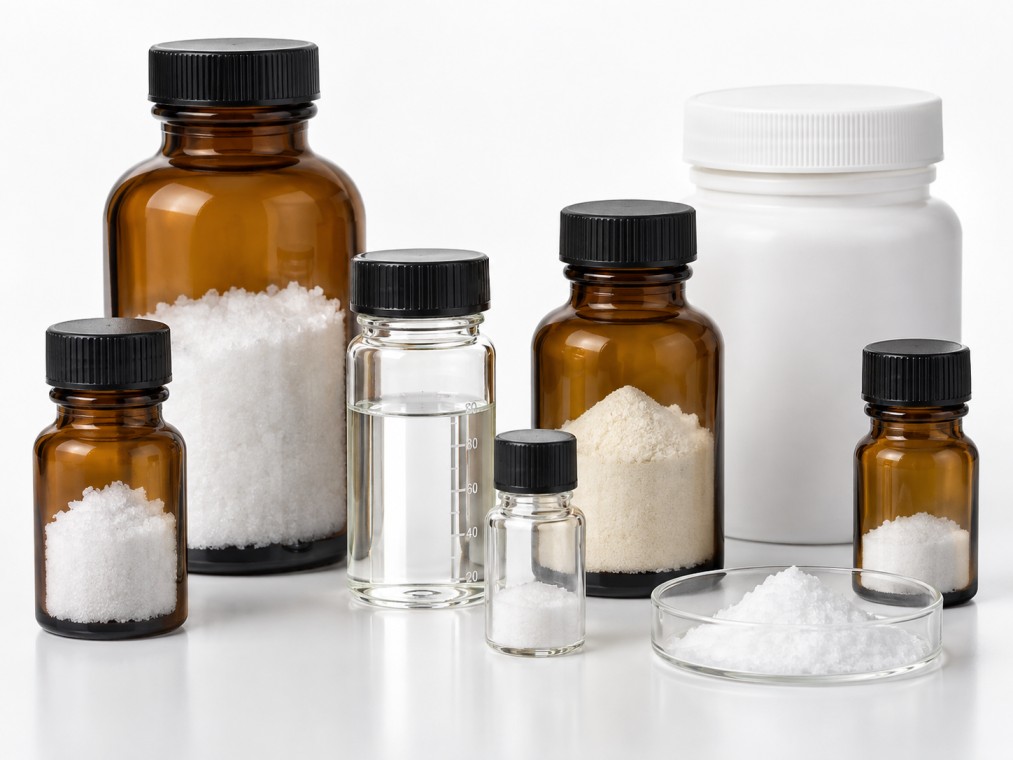
Building Cleaner Analytical Workflows Through Reagent Selection, Contamination Control and Better Method Consistency
Reliable analytical results depend not only on sophisticated instruments but also on the quality of every chemical entering the workflow. High Purity Products are especially important when laboratories need to minimise unwanted impurities that could influence blanks, obscure low-level signals or affect quantitative measurements. By choosing an appropriate purity grade from the beginning, researchers can create cleaner analytical conditions and improve confidence in sensitive laboratory procedures.
Why Can Reagent Purity Change an Analytical Result?
Every chemical reagent contains a defined level of impurities. For routine laboratory work, these traces may have little practical effect. However, analytical techniques capable of detecting very small concentrations can also detect contaminants introduced through solvents, acids, salts or other reagents.
This creates an important challenge: the instrument may respond not only to the target analyte but also to materials unintentionally introduced during sample preparation.
High-purity reagents help reduce this additional analytical background. Their value becomes particularly clear when the expected concentration of the target compound or element is close to the concentration of potential contaminants.
Purity Should Match the Analytical Question
Using the highest available reagent grade for every experiment is not always necessary. Instead, laboratories should choose purity according to the sensitivity and purpose of the method.
A routine preparation procedure may tolerate impurity levels that would be unacceptable in trace elemental analysis. Likewise, a chemical suitable for general synthesis may introduce background signals when used with highly sensitive instrumentation.
Important selection factors include the expected analyte concentration, detection limit, analytical technique, sample matrix and impurities most likely to interfere with the measurement.
This method-focused approach can improve analytical performance without making reagent selection unnecessarily complicated.
Why Are Blank Measurements So Important?
Analytical blanks help laboratories understand how much signal originates from reagents, containers and preparation procedures rather than from the actual sample.
If a blank produces a significant response, researchers may need to investigate possible contamination before interpreting sample results.
High-purity reagents can support lower and more stable blank values, but good handling practices remain essential. Contaminated glassware, dispensing tools or laboratory water can undermine the benefit of using a carefully specified chemical.
For sensitive procedures, laboratories should consider the entire preparation chain rather than evaluating one reagent in isolation.
High Purity Products in Chromatographic Analysis
Chromatography can be affected by small quantities of unwanted substances, particularly when low-level analytes are being measured. Contaminants may contribute additional peaks, increased baseline noise or unexpected detector responses.
Alongside suitable high-purity chemicals, Standards For Chromatography can support method development, identification and quantitative comparison.
Reference materials provide known substances against which chromatographic behaviour can be evaluated. When standards and sample-preparation reagents are appropriately selected, laboratories can create a more controlled analytical workflow from preparation through detection.
How Do High-Purity Reagents Support Quantitative Chemistry?
Quantitative analysis depends on knowing exactly how solutions have been prepared and how concentrations relate to measured responses.
When laboratories prepare solutions manually, reagent purity becomes part of the calculation. Unwanted materials or uncertain composition can introduce additional sources of analytical variation.
Prepared Volumetric Standard Solutions are relevant to workflows requiring defined concentrations for titration, verification or quantitative testing.
Combining reliable standards with carefully chosen high-purity reagents can help laboratories maintain better control over solution chemistry and improve comparability between analytical runs.
Water Determination and Reagent Quality
Moisture measurement is another field where reagent condition can significantly affect analytical performance.
Karl Fischer Reagents are specifically associated with Karl Fischer water determination, where controlled reagent chemistry is essential for reliable measurement.
The quality of reagents, exposure to atmospheric moisture and storage conditions can all influence a water-analysis workflow. Containers should therefore be handled carefully, and reagents should be stored according to their specified requirements.
This illustrates a broader principle of analytical chemistry: even a high-quality reagent can lose performance if it is handled improperly.
High Purity in Elemental Analysis
Elemental analysis can be particularly sensitive to contamination because the method may be designed to measure metals at very low concentrations.
Standards For AAS And ICP can support calibration and reference workflows used with atomic absorption spectroscopy and inductively coupled plasma techniques.
In these applications, contamination from acids, water, vessels or preparation equipment can contribute to the measured elemental signal. High-purity products can therefore play an important supporting role in reducing avoidable background contamination.
The reagent grade should be chosen according to the sensitivity of the method and the elements being measured.
Contamination Can Occur After Opening
Purity at manufacture is only the starting point. Laboratory practices determine whether that purity is maintained during actual use.
A few practical controls can make a significant difference:
- Keep containers closed when not actively dispensing material.
- Use clean, chemically compatible transfer equipment.
- Avoid returning unused reagent to the original container.
- Prevent contact between dispensing tools and contaminated surfaces.
- Label transferred or diluted solutions clearly.
- Store chemicals under the specified environmental conditions.
These steps help protect reagent quality and reduce accidental contamination across multiple analytical procedures.
Why Is Documentation Part of Purity Control?
Analytical troubleshooting becomes difficult when laboratories cannot identify which reagent batch, solution or preparation procedure was used.
Recording lot numbers, preparation dates, storage conditions and relevant solution concentrations provides useful traceability when results change unexpectedly.
Documentation can also help laboratories determine whether a shift in blank values or instrument response is linked to a reagent change rather than to the instrument itself.
In this way, purity management becomes part of a wider quality system rather than simply a purchasing decision.
Frequently Asked Questions
What are high purity products?
High purity products are chemicals manufactured with tightly controlled impurity levels for applications where unwanted contaminants could influence laboratory results.
When should a laboratory use high-purity reagents?
They are particularly useful for sensitive analytical work, trace measurements and procedures where background contamination could become significant.
Can high-purity chemicals eliminate all contamination?
No. Containers, instruments, laboratory water and handling practices can still introduce contaminants, so the complete workflow must be controlled.
Why are high-purity reagents useful in elemental analysis?
They can help reduce unwanted elemental background that might otherwise interfere with low-concentration measurements.
Are high-purity products required for routine laboratory work?
Not necessarily. The appropriate purity grade should be selected according to the method, sensitivity and intended application.
Developing a Better Purity Strategy
High-purity chemistry is most effective when reagent selection is integrated with standards, clean handling, appropriate storage and documented analytical procedures. The objective is not simply to purchase chemicals with the highest purity claim, but to reduce sources of uncertainty that matter to the specific method.
By matching reagent quality to analytical sensitivity and maintaining that quality throughout preparation, laboratories can produce cleaner blanks, more stable measurements and more dependable scientific data.