
How Does the PREVOST Engraving Tool Improve Marking?
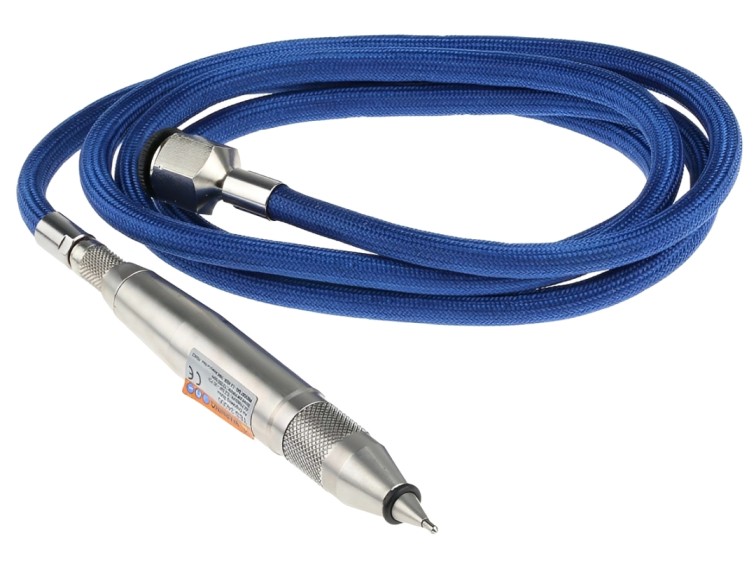
What Is the PREVOST TES 34000 Engraving Tool?
The PREVOST Engraving Tool TES 34000 is a compact pneumatic engraving stylus designed for controlled marking, etching and light material removal. With a rotational speed of up to 13,000 rpm, it gives technicians a practical way to create names, codes, arrows, serial references and identification marks.
Its slim aluminium body is approximately 160 mm long, helping users work comfortably in workshops, maintenance departments and fabrication areas. The tool uses a carbide needle, which is suited to detailed marking when the correct pressure and technique are applied.
Why Use a Pneumatic Engraver?
A pneumatic engraving tool operates from compressed air rather than relying on an internal electric motor or battery. This makes it useful in professional environments where an existing air system is already available and continuous operation is preferred.
The PREVOST TES 34000 has an unloaded air consumption of approximately 30 litres per minute. It uses an inlet thread of 1/4-inch BSPF and is generally paired with an 8 mm, or 5/16-inch, air hose. A regulated, clean air supply helps maintain more consistent performance and reduces contamination inside the tool.
Which Specifications Matter Most?
Before selecting the TES 34000, engineers and maintenance teams should review the following characteristics:
- Maximum speed: 13,000 rpm
- Tool length: approximately 160 mm
- Body material: aluminium
- Engraving needle: carbide
- Air consumption: approximately 30 l/min unloaded
- Air inlet: 1/4-inch BSPF
- Recommended hose internal diameter: approximately 8 mm
- Sound level: around 75 dBA
- Product type: pneumatic engraving tool
The working pressure, lubrication requirements and air-quality limits should be confirmed in the current manufacturer instructions before use.
Where Can It Be Used?
The PREVOST Engraving Tool is valuable wherever permanent identification is needed. Engineering workshops can mark tools, fixtures and components, while maintenance teams can add asset numbers or service references to machinery.
It can also support:
- Metal part and equipment identification
- Fabrication and repair work
- Automotive component marking
- Machinery traceability
- Workshop tool ownership marks
- Control-panel and enclosure labelling
- Prototype and model preparation
- Small-scale craft and restoration projects
The result depends on the material, needle condition and operator control. Always test the marking method on a spare piece before working on a finished component.
How Should a Surface Be Prepared?
A clean, stable surface produces a clearer engraving. Remove oil, loose paint, rust flakes and other contamination before starting. If the surface is curved or uneven, plan the marking path carefully so the needle does not jump or create an inconsistent line.
For accurate positioning, technicians may create a light reference mark first. Suitable Pin, Parallel and Centre Punches can help establish a starting point on metal components, especially when a code or straight line must be repeated across several parts.
Avoid engraving directly over dirt, loose coatings or unstable burrs. Surface preparation improves appearance and reduces unnecessary wear on the carbide needle.
Why Is Workholding Important?
The component should be secured before the air supply is opened. Movement can produce uneven lettering, overshoot the intended line or cause the needle to slip towards the operator.
Small items may be positioned with suitable Pliers, clamps or a bench fixture, provided the holding method keeps hands away from the engraving path. Larger workpieces should be supported on a stable bench or secured in a vice.
Never hold a small component loosely in the palm while engraving. A firm workholding arrangement improves accuracy and makes it easier to maintain a consistent feed speed.
How Can Engraving Quality Be Improved?
Clear engraving comes from light, controlled passes rather than excessive pressure. Allow the carbide needle to do the cutting, and guide the stylus slowly along the planned mark. Pressing too hard can widen the line, damage delicate surfaces and increase vibration.
For lettering, mark the outline first and then deepen the strokes gradually. On thin sheet material, use reduced pressure to avoid distortion. On harder materials, several shallow passes are usually easier to control than one deep pass.
The TES 34000 is intended for engraving and light removal. It should not be treated as a heavy milling tool or forced into thick material beyond its intended capability.
What Air-System Checks Should Be Completed?
Compressed air quality has a direct effect on pneumatic tool life. Moisture, abrasive particles and excessive oil can affect internal components and reduce consistent movement. Use appropriate filtration and regulation, and inspect hose connections for leaks before starting work.
The tool produces approximately 75 dBA of sound, so hearing protection should be considered according to the workplace noise assessment. Operators should also use suitable eye protection because engraving can produce sharp chips, dust or fragments.
During cleanup, an ESD Safe Vacuum can help remove fine debris from a workstation while reducing the risk of static-related damage around sensitive electronic assemblies.
Can It Support Control-Panel Identification?
Engraving is useful for permanent equipment labels where adhesive markings may peel, fade or become contaminated. Front panels can be marked with switch positions, terminal references, asset codes and maintenance instructions.
For panels containing Toggle Switches, engraved legends can make operating positions easier to understand. Marking around Indicators & Indicator Components can also help technicians interpret alarm, power and status functions during service work.
The same approach can be used around Relays & Contactors inside control cabinets, provided the enclosure is isolated and the marking process does not allow dust to enter sensitive equipment.
How Should the Tool Be Maintained?
Disconnect the air supply before inspection, cleaning or needle replacement. Wipe the aluminium body after use and remove dust from the nose area. Check the carbide needle for wear, bending or damage, as a worn tip can produce rough marks and require excessive pressure.
Follow the manufacturer’s lubrication guidance and use only suitable pneumatic-tool oil where specified. Store the engraver in a dry case or drawer, away from impact, moisture and loose metal debris.
The air hose, inlet thread and fittings should also be checked regularly. A damaged hose or leaking connector can reduce speed and create an avoidable workplace hazard.
Is the PREVOST TES 34000 a Practical Professional Choice?
The PREVOST Engraving Tool TES 34000 is a useful choice for technicians who need compact, repeatable marking from a pneumatic hand tool. Its 13,000 rpm speed, carbide needle, 160 mm aluminium body and modest air consumption make it suitable for identification, traceability and light engraving tasks across UK workshops and industrial maintenance environments.
With secure workholding, clean compressed air, controlled pressure and appropriate personal protection, the TES 34000 can produce durable marks while helping teams keep tools, components, panels and equipment clearly identified.