
How Can Imidazoles Support More Controlled Chemical Synthesis?
Understanding Ring Reactivity, Derivative Selection and Reliable Laboratory Use
Successful synthesis depends on choosing compounds with the right reactivity. Imidazoles include the parent heterocycle and modified derivatives used in research, reaction development and specialist chemical workflows. Their nitrogen-rich aromatic ring can serve as a molecular starting point, base, nucleophile or coordination partner under suitable conditions.
What Makes the Imidazole Ring Chemically Distinctive?
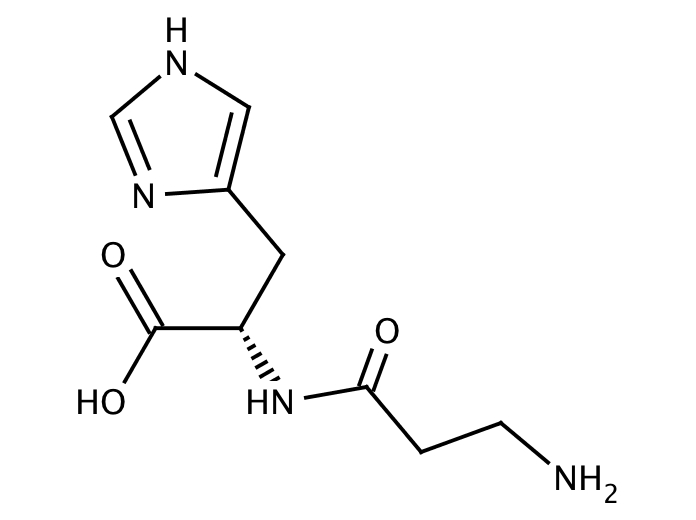
Imidazole is a five-membered aromatic heterocycle containing three carbon atoms and two nitrogen atoms. The two nitrogen positions do not behave identically. One resembles a pyridine-type nitrogen with an available electron pair, while the other contributes its electron pair to the aromatic system. This arrangement gives the ring useful acid-base, hydrogen-bonding and coordination behaviour.
The parent structure is compact, yet substitution can change its solubility, basicity, steric profile and reaction pathway. An alkyl group, electron-withdrawing substituent, sulphur-containing group or fused benzene ring can produce substantially different handling and performance characteristics. Related derivatives are not automatically interchangeable.
Why Are Imidazole Derivatives Useful in Route Development?
Chemists value the imidazole framework because it can remain part of a target molecule or provide temporary functionality during a reaction. Depending on the chosen derivative and conditions, an imidazole compound may support activation, buffering, catalysis, ligand formation or the construction of a larger heterocyclic system.
This versatility is relevant when screening alternative routes. A researcher may compare derivatives to adjust reaction rate, selectivity, purification difficulty or compatibility with other functional groups. Products across Building Blocks can help teams evaluate neighbouring chemical families when an imidazole scaffold forms only one part of a broader synthetic plan.
How Can Substitution Change Functional Performance?
A substituent changes more than molecular weight. Its position and electronic effect can influence where the molecule reacts and how strongly it interacts with acids, bases, solvents or metal centres. For example, N-substitution removes the N-H site and can alter hydrogen bonding, while cyano groups usually reduce electron density and modify acidity or nucleophilicity. Fused derivatives such as benzimidazoles introduce a larger aromatic surface and different steric behaviour.
These differences can affect:
- Reaction temperature and completion time
- Solubility in the selected reaction medium
- Sensitivity to water or atmospheric exposure
- Product distribution and side-reaction formation
- Extraction, crystallisation and chromatographic behaviour
- Storage conditions and long-term stability
Small-scale comparison experiments can reveal whether closely related derivatives behave differently.
Which Types of Compounds Appear in the Category?
The current selection includes parent imidazole grades alongside substituted and fused-ring structures. Examples include 1-ethylimidazole, 4,5-dicyanoimidazole, 2-mercaptobenzimidazole and 4-imidazoleacetic acid hydrochloride. These names reveal meaningful structural differences that should guide selection before assay or pack size is considered.
The category also sits within Aroma Chemicals, but category placement does not mean that every listed material has the same purpose or sensory application. Buyers should use the exact chemical identity, CAS number, specification and intended laboratory function as their primary decision criteria.
How Should Solvent and Reaction Conditions Be Chosen?
Solvent choice affects dissolution, reaction rate, heat transfer and downstream isolation. Parent imidazole may behave differently from hydrophobic fused derivatives or ionic hydrochloride salts. A solvent that creates a clear mixture at room temperature may perform differently after cooling, concentration or addition of another reagent.
Development work should record concentration, addition order, temperature, mixing time and visible changes. Water content also deserves attention because it can affect moisture-sensitive reagents, equilibrium and product isolation. Before scaling, teams should test whether the selected imidazole derivative remains stable and soluble throughout the complete process rather than only at the starting stage.
How Can Identity and Purity Be Confirmed?
Quality assessment should match the material and its role. A certificate of analysis may report assay, melting range, water content or relevant impurities, but the analytical method should also be reviewed. Identity can be supported by techniques such as infrared spectroscopy, NMR or mass spectrometry, while chromatographic methods may help assess related substances and residual components.
No single result describes every quality attribute. A high assay does not automatically confirm low water content, correct salt form or absence of a critical positional isomer. Where a compound influences a sensitive reaction, teams should define acceptance limits around the impurities most likely to affect yield, selectivity or reproducibility.
What Handling Practices Support Consistent Results?
Handling requirements vary across the family. Some imidazole materials may be moisture-sensitive, irritating or harmful under particular exposure conditions. Users should consult the current safety data sheet and product specification before opening, weighing or transferring a material.
Good laboratory control may include:
- Suitable gloves, eye protection and protective clothing
- Local ventilation or a fume cupboard where required
- Clean, dry tools reserved for compatible materials
- Prompt resealing after dispensing
- Storage within the stated temperature and environmental limits
- Clear labelling and batch traceability
- Disposal through an approved chemical-waste route
These measures protect personnel while limiting contamination and moisture uptake.
What Should Buyers Check Before Ordering?
A purchasing review should confirm:
- Exact compound name and CAS number
- Substitution position and salt form
- Required assay and analytical method
- Water, residual solvent and impurity limits
- Physical form and expected solubility
- Pack size and anticipated consumption rate
- Storage temperature and container requirements
- Safety documentation and intended research use
Similar names can describe meaningfully different structures. Confirming identifiers before ordering reduces the risk of receiving a compound that cannot reproduce the planned reaction.
Turning Heterocyclic Versatility into Reproducible Chemistry
Imidazoles offer more than a recognisable five-membered ring. Their two nitrogen atoms and adaptable substitution patterns create useful options for synthesis, catalysis, coordination and molecular design. Reliable results depend on matching the exact derivative to the intended function, verifying identity and purity, and controlling solvent, moisture and storage conditions. Treating each imidazole as a defined chemical system helps turn structural versatility into repeatable laboratory performance.