How Can the SKF 17-Piece Bearing Puller Reduce Maintenance Downtime?
Why Do Seized Bearings Cause Extended Shutdowns?
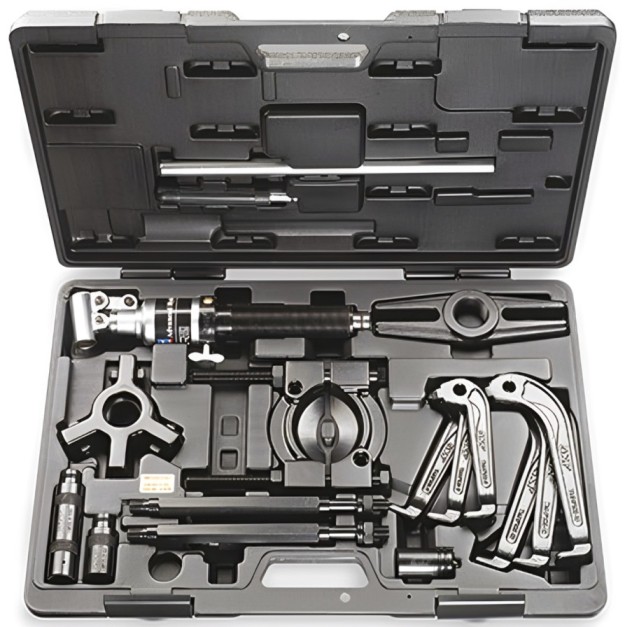
During an unplanned machinery stoppage, the SKF 17-Piece Bearing Puller gives maintenance teams a controlled solution for removing stubborn bearings, gears, hubs and pulleys. As a hydraulic option within professional Bearing Pullers ranges, MPN TMHC 110E is designed for demanding press-fit applications where ordinary mechanical force may be insufficient. Its adaptable pulling methods can help technicians complete disassembly without wasting valuable shutdown time on improvised removal techniques.
Bearings can become difficult to remove because of corrosion, excessive heat, contamination, fretting or years of continuous operation. When technicians rely on hammering or uncontrolled leverage, the original bearing problem can quickly become a damaged shaft, distorted housing or cracked machine component. A properly installed hydraulic puller concentrates force in the required axial direction.
How Does Hydraulic Force Improve Maintenance Efficiency?
The SKF 17-Piece Bearing Puller can apply up to 100 kN, equivalent to approximately 11.2 US tons, through its hydraulic spindle. This force is developed gradually, allowing the operator to observe the component as it begins to move. Progressive loading is easier to manage than impact force because the technician can stop immediately if a jaw changes position or the component starts moving unevenly.
Hydraulic operation also reduces the physical effort required during difficult extraction work. Instead of using a long mechanical handle or striking the component repeatedly, the technician can build pressure in a measured way. This supports more consistent working practices across maintenance teams and can shorten removal time when a tightly fitted component would otherwise resist ordinary workshop tools.
Why Are Different Pulling Configurations Valuable?
Machine layouts vary considerably, so a single pulling arrangement cannot suit every application. The jaw mechanism on the SKF 17-Piece Bearing Puller can be arranged with two or three arms. Three arms provide balanced engagement when there is clear access around the component, while two arms can be useful where guards, structural members or neighbouring parts limit the available working space.
Where there is insufficient space for conventional jaws, the strong-back separator can grip behind the bearing’s inner ring. Pulling close to the interference fit helps reduce the load passing through the bearing’s rolling elements. Extension rods also allow the working reach to be adapted for deeper installations, with pulling lengths of up to approximately 245 mm possible when the arrangement is correctly assembled.
Where Can the TMHC 110E Be Used?
The puller is well suited to rotating equipment found in manufacturing, processing, material handling and building services. During the overhaul of AC Motors used for pumps, fans or conveyors, it can assist with removing bearings and shaft-mounted drive components. Maintenance teams working on Gearboxes can also use the tool for controlled removal of bearings, gears and hubs during planned rebuilding work.
Other suitable environments include mining facilities, power generation sites, steel processing plants, marine workshops and heavy machinery service departments. The SKF 17-Piece Bearing Puller is especially useful where several different shaft diameters and component depths may be encountered during the same maintenance programme.
What Should Be Checked Before Dismounting Begins?
Effective bearing removal starts with inspection rather than force. Technicians should identify the component being removed, determine which ring or hub has the interference fit and check whether retaining nuts, circlips, locking plates or keys are still installed. Any fastener preventing axial movement must be removed before hydraulic pressure is applied.
For assemblies with restricted visibility, suitable Inspection Cameras can help technicians examine internal areas without immediately dismantling additional machine sections. Visual inspection may reveal corrosion, cracked surfaces, displaced seals or hidden retaining hardware. This information allows the team to choose a safer gripping point and avoid applying force against an overlooked obstruction.
The shaft end should also be cleaned before the hydraulic spindle is positioned. Dirt, burrs or existing damage can prevent accurate centring and may cause the spindle to move sideways as pressure increases.
How Can Correct Removal Preserve Fault Evidence?
A damaged bearing often contains useful evidence about the original machine fault. Discolouration can indicate overheating, polished areas may suggest incorrect fitting, and irregular raceway marks can point to misalignment or excessive vibration. Aggressive removal may destroy these clues before technicians have an opportunity to investigate them.
When the bearing is pulled steadily from the ring carrying the interference fit, the SKF 17-Piece Bearing Puller can help preserve its condition for analysis. This allows engineers to determine whether the failure originated from poor lubrication, contamination, electrical damage, incorrect mounting or abnormal operating loads. Understanding the cause is more valuable than simply replacing the failed part because it reduces the likelihood of repeated breakdowns.
How Should Pulling Force Be Applied?
The hydraulic spindle must be aligned with the centre of the shaft, while every jaw should engage the component at an equal depth. The crossbeam should remain square, and the selected arms must have sufficient contact with a strong pulling surface. Applying a small initial load gives the operator an opportunity to confirm that the arrangement remains stable.
Pressure should then be increased gradually. If the component tilts, the jaws begin to slip or the puller structure bends, the operation must stop. Releasing the pressure and correcting the setup is safer than attempting to overcome poor alignment with additional force. The rated capacity must never be exceeded, and pipes or improvised extensions should not be added to increase leverage.
What Safety Controls Support a Reliable Shutdown?
Before work starts, the machine must be isolated from electrical, pneumatic, hydraulic and mechanical energy. Rotating parts should be stationary, stored energy must be released, and the maintenance area should be controlled according to the site’s lockout procedure.
Operators need suitable eye protection and should avoid standing directly in the expected release path. Heavy gears, pulleys or bearings require support because they may drop or move suddenly when the press fit releases. A protective barrier or blanket may also be appropriate for high-force applications.
The SKF 17-Piece Bearing Puller should be inspected for damaged threads, bent arms, hydraulic leakage or distorted contact surfaces before each task. Pressure must be released completely before technicians reposition any part of the pulling arrangement.
How Can Teams Confirm That the Repair Was Successful?
After the replacement component has been correctly installed and the machine has returned to service, condition monitoring can confirm whether the original problem has been resolved. Properly positioned Vibration Sensors can detect changes associated with bearing wear, imbalance, looseness or misalignment during operation.
Comparing post-repair measurements with previous maintenance records provides a clearer picture of machine condition. Temperature, noise and lubrication behaviour should also be reviewed during the initial running period. These checks turn bearing replacement into a complete reliability process rather than an isolated mechanical task.
Why Choose the SKF 17-Piece Bearing Puller?
For maintenance teams responsible for critical rotating assets, the SKF 17-Piece Bearing Puller offers a practical combination of hydraulic power, adaptable reach and multiple gripping approaches. It can reduce the time spent struggling with seized components while helping protect valuable shafts, housings and machine assemblies.
When MPN TMHC 110E is combined with careful inspection, accurate alignment and controlled pressure, it supports safer dismounting and better maintenance decisions. This makes it a valuable tool for organisations seeking shorter shutdowns, dependable repairs and improved long-term machinery reliability.