
How Does Citric Acid Solution, 50 % Support Precise Laboratory and Industrial Processing?
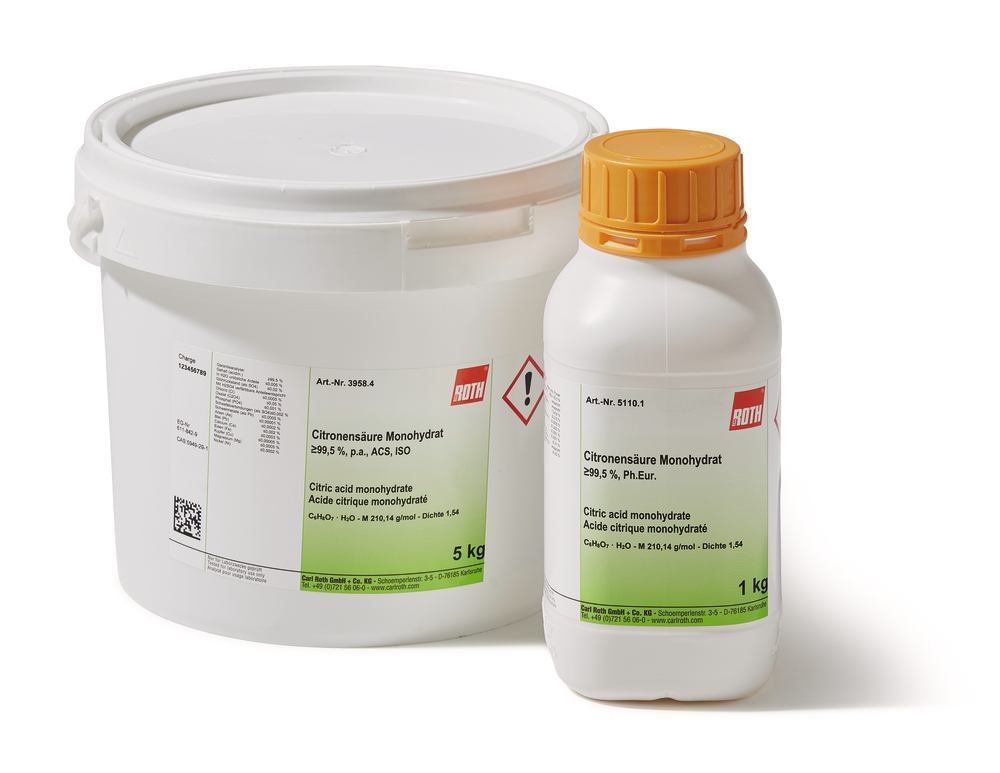
What Is Citric Acid Solution, 50 %?
Products within the Citric Acid Solution, 50 % category provide citric acid already dissolved in water at a defined concentration, making it suitable for processes where a ready-to-use liquid acid is preferred over solid citric acid.
A 50% solution can support controlled acidification, formulation, laboratory preparation and selected industrial processes. Because the acid is already in liquid form, users can avoid the separate weighing and dissolution steps required with crystalline citric acid.
The product grade and specification should always be checked against the intended application.
What Is Citric Acid Solution 50% Used For?
Citric Acid Solution 50% may support processes requiring acidity, citrate chemistry or controlled pH reduction.
Depending on the product grade, applications may include:
- pH adjustment
- Laboratory solution preparation
- Chemical formulation
- Process-water treatment
- Buffer-related applications
- Cleaning and descaling
- Preparation of citrate compounds
- Research and development
- Industrial processing
- Controlled liquid dosing
The required quantity should be calculated according to the target formulation rather than estimated during use.
Why Use a 50% Citric Acid Solution Instead of Citric Acid Powder?
A ready-made solution can simplify workflows where water is already part of the formulation.
Advantages may include:
- No separate dissolution stage
- Faster incorporation into liquid batches
- Easier pumping and dispensing
- More consistent liquid dosing
- Reduced handling of powders
- Convenient preparation of weaker solutions
Solid citric acid may still be more appropriate when dry blending or minimal water addition is important.
The best form depends on the process rather than one option being universally superior.
How Do You Dilute Citric Acid Solution 50% Correctly?
Dilution begins by calculating how much 50% solution and water are required for the final concentration.
A controlled procedure normally includes:
- Confirming the target concentration
- Calculating the required quantities
- Preparing the dilution water
- Adding citric acid solution gradually
- Mixing continuously
- Checking the final quantity
- Allowing the mixture to become uniform
Accurate calculations are particularly important when preparing analytical or repeatable production batches.
The final preparation should be clearly labelled with its concentration, preparation date and batch information.
Why Does Water Quality Matter When Preparing Citric Acid Solutions?
Water can introduce minerals, ions or impurities that affect the behaviour of a prepared solution.
Products and resources within Water Analysis can support workflows where water quality needs to be assessed before use in controlled laboratory preparations.
Water quality can influence:
- Conductivity
- Metal-ion content
- Solution clarity
- Analytical results
- Chemical stability
- Reproducibility
The required water specification depends on the application. Routine industrial preparation may have different requirements from analytical or research work.
How Can Citric Acid Solution 50% Be Used for pH Adjustment?
Citric acid can lower the pH of suitable aqueous formulations, but the final pH depends on the entire composition of the system.
Factors include:
- Initial pH
- Buffering capacity
- Citric acid quantity
- Other ingredients
- Temperature
- Total volume
- Mixing efficiency
For better control, the acid should be added progressively.
As the target pH approaches, smaller additions should be made and the solution should be mixed thoroughly before another measurement is taken.
This approach reduces the risk of over-acidification.
Why Is Mixing Important During Citric Acid Dosing?
Proper mixing ensures that the added acid is distributed throughout the complete batch.
Without sufficient agitation, one area may temporarily contain a much higher acid concentration than another.
Suitable Magnetic Stirrers With Hotplate can support laboratory-scale mixing where their operating range and materials suit the procedure. Heating should only be used when required by the approved method.
Important mixing factors include:
- Vessel size
- Batch volume
- Stirrer speed
- Liquid viscosity
- Addition rate
- Mixing time
- Temperature
Final measurements should be taken only after the preparation has become uniform.
Can Citric Acid Solution 50% Concentration Be Checked by Titration?
Yes. Acid-base titration can be used to evaluate citric acid concentration when a suitable analytical method is available.
Products within Digital Burettes can support controlled delivery of titrant during appropriate laboratory procedures.
Concentration testing may be useful when:
- Checking incoming material
- Confirming a diluted solution
- Investigating unusual process results
- Performing batch quality control
- Verifying stored material
Accurate titration depends on correct sample preparation, a suitable standard solution, reliable endpoint determination and proper calculation.
Is Citric Acid Solution 50% Suitable for Descaling?
Citric acid is often used in suitable descaling formulations because its acidity can help dissolve certain mineral deposits.
Effectiveness depends on:
- Deposit composition
- Acid concentration
- Surface material
- Contact time
- Temperature
- Agitation
- Rinsing procedure
Citric acid should not automatically be used on every surface. Equipment compatibility should be confirmed before treatment.
Using a stronger solution or increasing contact time beyond what is required may offer little benefit and can affect sensitive materials.
What Is the Difference Between Citric Acid Solution 50% and Citric Acid Monohydrate?
Citric Acid Solution 50% is a liquid containing citric acid and water, while citric acid monohydrate is a crystalline solid containing water within its crystal structure.
A 50% solution may be preferable when:
- Liquid dosing is required
- Faster batch preparation is needed
- The formulation already contains water
- Pump-based transfer is used
Citric acid monohydrate may be preferable when:
- Dry storage is required
- Custom solution strengths are prepared
- Dry blending is necessary
- Water must be added separately
The two forms should not be substituted without adjusting the formulation calculation.
How Should Citric Acid Solution 50% Be Stored?
Citric Acid Solution 50% should be stored in a compatible, securely closed container under the conditions specified for the product.
Suitable Acid and Base Storage Cabinets can support organised storage of compatible corrosive materials where appropriate for the laboratory’s chemical-storage system.
Storage controls should include:
- Clear product identification
- Compatible containers
- Secure closures
- Spill containment
- Appropriate segregation
- Suitable temperature
- Routine inspection
- Batch traceability
Transferred material must remain identifiable and traceable to the original container.
What Should Be Checked Before Using Citric Acid Solution 50%?
Before use, users should confirm:
- Product identity
- Stated concentration
- Product grade
- Batch number
- Packaging condition
- Certificate documentation
- Storage history
- Intended application
Any unexpected change in appearance, leakage or damaged packaging should be investigated before the material enters a controlled process.
Is Citric Acid Solution 50% Safe to Handle?
Citric Acid Solution 50% is a concentrated acidic solution and should be handled using suitable protective controls.
Depending on the procedure, these may include:
- Chemical-resistant gloves
- Protective eyewear
- Laboratory clothing
- Splash protection
- Controlled dispensing equipment
- Appropriate ventilation
- Eyewash access
- Spill-response materials
The product-specific safety data sheet should guide handling, storage and emergency procedures.
Conclusion
Citric Acid Solution, 50 % provides a convenient liquid source of citric acid for controlled acidification, formulation, laboratory preparation and selected cleaning or industrial processes.
Its ready-made concentration can simplify dosing and remove the need to dissolve solid citric acid before use. Reliable performance depends on suitable water quality, gradual acid addition, effective mixing, analytical verification and compatible storage.
By controlling these factors and maintaining clear batch records, laboratories and manufacturers can improve consistency while reducing avoidable preparation and dosing errors.